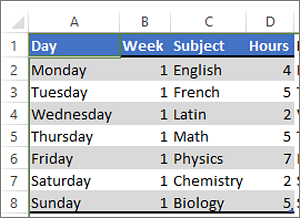
 Here's how: Select the range of cells that you want to format. Go to Home > Format as Table. Pick a table style that has alternate row shading. To change the shading from rows to columns, select the table, under Table Design, and then uncheck the Banded Rows box and check the Banded Columns box.
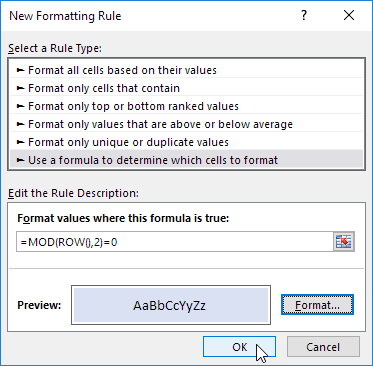 To shade alternate rows in Excel, use conditional formatting or apply a table style. Coloring every other row makes it easier to read your data.
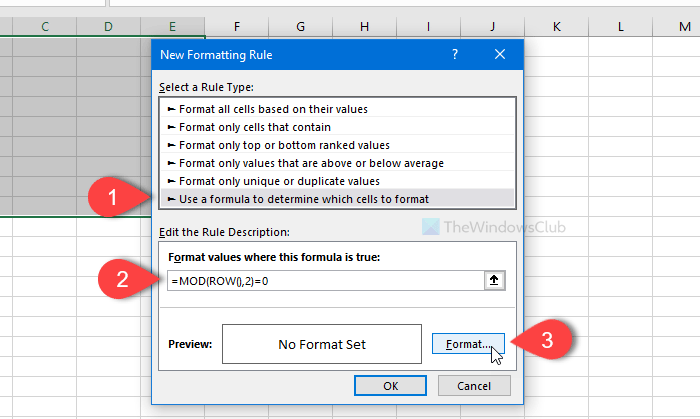 Let’s assume you are creating a spreadsheet for a school or office project and need to colorize every alternate row or column. There are two ways to do that in Microsoft Excel.
 In the Menu, go to Format > Alternating colors. This sets the entire table (B2:D11) as the Apply to range. Under Styles, Header is automatically ticked – you can remove the checkmark if you don’t need a header row. Choose a style from Default styles, or create a Custom style and pick your own colors for the header and alternate rows.